No Pokies Lounge, No Problem? The Pub Gamblers Taking Their Game Online
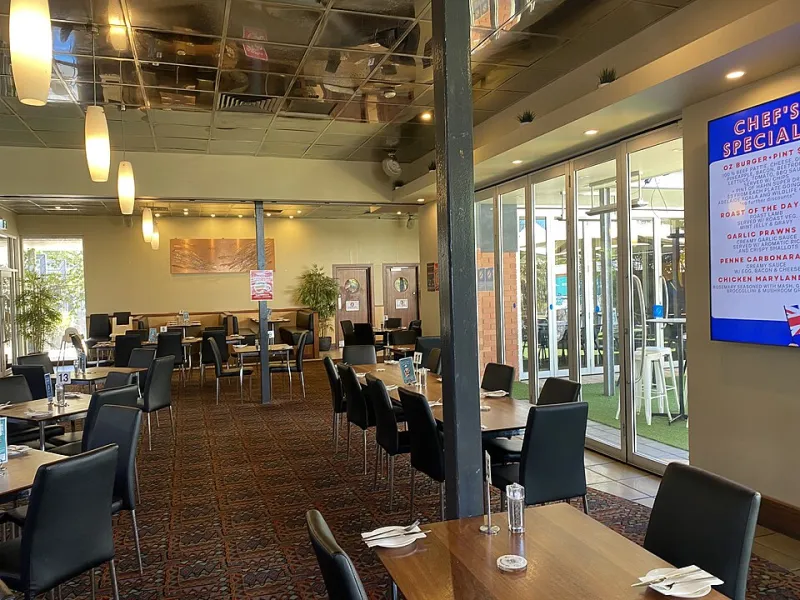
Photo: RegionVisitor90, CC0, via Wikimedia Commons
There's a particular kind of Australian who knows the exact sound of their local pokies room at 9pm on a Thursday. The low hum of machines, the occasional electronic fanfare of a minor win, the smell of carpet that's seen better decades, and the quiet, unspoken camaraderie of people who've chosen to spend their evening in exactly the same way. It's not glamorous. But for a significant slice of the Australian gambling population, it was home.
That world hasn't disappeared, but it's shrinking — or at least, it's competing with something new. Across the country, a wave of traditional pub and club gamblers are migrating to online platforms. Some were nudged by COVID lockdowns and never quite went back. Others were drawn by convenience, bonuses, or just curiosity. And a smaller but vocal group made the switch deliberately, fed up with the physical limitations of their local.
What's happening when these players arrive in the digital space is genuinely fascinating — and more psychologically complex than either side of the debate tends to acknowledge.
The Pull of the Physical
Before we talk about why people are leaving, it's worth being honest about what they're leaving behind. Because it's not nothing.
Darren, 54, has been playing pokies at the same Wollongong RSL for nearly twenty years. He made the move online about eighteen months ago, initially just to try it during a period when he couldn't get out easily. He still goes back to the club occasionally, but his primary play is now digital.
"The machine I used to play, I knew it," he says. "I knew the sound it made before a bonus. I knew how it sat. That sounds mad, but it mattered. There was a ritual to it." He pauses. "Online, the game might be the same title, but it's not the same experience. Something's missing and I couldn't tell you exactly what."
What Darren is describing is what psychologists who study gambling environments call the "atmospheric effect" — the way physical cues like lighting, sound design, spatial layout, and even the presence of other people shape emotional state and, consequently, betting behaviour. Casinos and gaming venues have spent decades refining these environments. The online space, for all its advantages, is starting from scratch in this regard.
Digital Natives vs. The Converted
Here's something the online platforms didn't fully anticipate: players who come from a physical gaming background behave differently from those who started online.
Digital-native bettors — younger players who've never really had a relationship with a physical venue — tend to be more comfortable with rapid session switching, playing multiple games in a single sitting, and engaging with platform features like tournaments, leaderboards, and live chat. They treat the lobby like an app store: browse, sample, move on.
Migrants from physical venues are different. They tend to be more loyal to a single game or a small rotation of familiar titles. They often play for longer uninterrupted sessions, mirroring the way they'd sit at a machine in a club. They're less likely to use bonuses strategically and more likely to be confused or irritated by the volume of promotional noise that digital platforms generate.
Susan, 61, from a suburb outside Brisbane, made the switch two years ago. She describes her first few months online as genuinely disorienting. "The bonuses and the pop-ups and the offers — it was overwhelming. At the club, you put your money in and you play. Online, there's always something happening that isn't the game. I didn't know what I was supposed to be paying attention to."
This isn't a small cohort. Industry data suggests that the 45-65 demographic represents one of the fastest-growing segments of new online casino registrations in Australia. Understanding how they play — and what they need — is increasingly important for operators who want to retain them.
The Unexpected Psychology of the Quiet Room
One of the most consistent things that long-term pub and club gamblers report after moving online is the strange silence of it. Not literal silence — most of them play with sound on — but the absence of ambient social context.
In a pokies room, you're alone but not alone. There are other people around you, staff who know your name, the physical reality of a space that has weight and history. That social scaffolding, it turns out, does something important. For many players, it acts as a natural brake. You're aware of how long you've been sitting there because the environment changes around you — someone comes in, someone leaves, the bar gets busier, a staff member asks if you want a drink.
Online, that scaffolding disappears. There's no ambient clock. No social cues. No one walking past. And for players who relied on the physical environment to regulate their sessions — often without realising they were doing so — this absence can be genuinely dangerous.
"At the club I'd always leave when the footy crowd came in," admits Darren. "It was just too noisy. That was my cut-off, even if I didn't think of it that way. Online, there's no footy crowd. There's nothing to tell me it's time to go."
This is one of the more under-discussed responsible gaming challenges in the current landscape. The environmental cues that helped moderate behaviour in physical venues don't exist online, and the burden of session management shifts entirely to the player — often without them realising the shift has occurred.
What Platforms Can Learn From the Pub
The irony is that online casinos could learn a great deal from the physical environments their new players are migrating from. Structured session rhythms. Clear time cues. Social elements that create natural pauses. These aren't alien concepts — they're just underimplemented in the digital space.
Some platforms are experimenting with features designed to reintroduce environmental rhythm: session timers that feel less like warnings and more like natural check-ins, social features that create a sense of shared space, and interface design that acknowledges the passage of time rather than obscuring it.
For players making the transition, the advice is simpler: build your own scaffolding. Set a session limit before you start. Use a timer. Create a ritual around stopping, just like the physical environment used to create one for you. The game is the same. The context is different. That difference matters more than most people expect.
Same Instinct, New Arena
Australian pub and club culture built something real around gambling — community, ritual, and a particular kind of casual intensity that doesn't apologise for itself. The players carrying that culture into the online space are bringing something valuable with them, even if the platforms they're landing on don't always know what to do with it.
The migration isn't going to slow down. But the more honestly we talk about what changes when the physical environment disappears, the better equipped everyone — players and operators alike — will be to navigate what comes next.