One More Won't Hurt: The Weekend Ritual Rewiring Aussie Brains One Spin at a Time

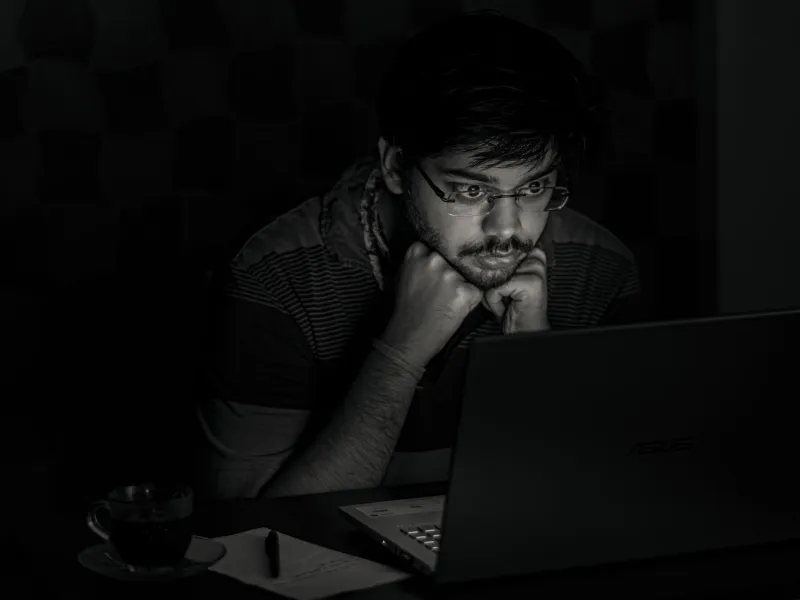
It's Saturday morning. The footy's not on until three. You've got a coffee going, the couch is comfortable, and you figure — why not knock out a few spins before the day gets started? An hour later, you're still there. The coffee's cold. You've lost track of how many rounds you've played. And somewhere between the first spin and the fifteenth, the session stopped being a choice and started being a rhythm.
Sound familiar? You're not alone, and more importantly, you're not weak. What's happening in those moments is neurological, cultural, and carefully engineered — a combination that makes Australian players particularly vulnerable to the slow drift from occasional flutter to deeply grooved habit.
The Brain Doesn't Care About Big Wins
Here's something that surprises most people: the psychological hooks that make casino gaming habit-forming aren't primarily attached to large payouts. Neuroscience has consistently shown that it's the frequency of small rewards — not the size of the occasional jackpot — that most effectively conditions the brain into repetitive behaviour.
Every near-miss, every small credit return, every brief audio-visual hit from a winning line activates the dopamine system. That system isn't designed to celebrate victories. It's designed to anticipate them. Each incremental session teaches your brain that the next spin might be the one, and that anticipation becomes its own reward. You're not chasing the win anymore. You're chasing the feeling of being about to win.
This is why short, repeated sessions across a weekend create stronger psychological conditioning than a single long session. Four two-hour stints across Saturday and Sunday build more neural reinforcement than one eight-hour marathon. The brain logs the pattern — weekend arrives, sessions begin — and starts priming that anticipation before you've even opened the app.
The Aussie 'One More' Culture
Now layer on something distinctly Australian, and things get more complicated.
The 'just one more' mentality is practically a cultural institution here. One more beer at the pub. One more quarter in the game. One more hand before we call it. Australians have a well-documented relationship with the idea that stopping is something you do after one more — and that reluctance to tap out early is often framed as a positive trait. Mateship, resilience, not being a soft touch.
This cultural script creates a psychological environment where continuing feels socially and personally justified, even when the rational case for stopping is staring you in the face. It's not that Aussies lack self-awareness — it's that the internal narrative around 'just one more' is so normalised that it bypasses the usual alarm systems. You're not rationalising bad behaviour; you're following a script that's been reinforced your whole life.
Online casinos don't create this tendency. But they absolutely exploit it.
Frictionless Access and the Disappearing Exit
The shift from physical to digital gambling removed something crucial: friction. Walking into a pub to play the pokies involves a series of micro-decisions — getting dressed, driving there, finding a machine, converting cash. Each of those steps is a potential exit point. A moment where the spell could break.
Online platforms have systematically eliminated every one of those exits. The casino is in your pocket. It loads in seconds. Your payment method is saved. There's no closing time, no last drinks call, no drive home to sober you up. The environment is engineered to make continuing the path of least resistance and stopping feel like an active, effortful choice.
Automatic top-ups, seamless reloads, and personalised bonus prompts all serve the same function: they reduce the cognitive load of continuing while increasing the effort required to stop. And when your brain is already primed by repeated small rewards and your cultural default is 'one more,' that engineered frictionlessness becomes genuinely powerful.
How the Ritual Forms Without You Noticing
Habit formation researchers describe a loop: cue, routine, reward. The weekend is the cue. The session is the routine. The dopamine hit — win, near-miss, or just the anticipation — is the reward. Repeat this loop enough times and the association becomes automatic. Friday night arrives and your brain is already reaching for the phone before you've consciously decided anything.
What makes this particularly insidious is the gradual nature of the shift. Nobody sits down on a random Saturday and decides to make online pokies their weekend ritual. It happens through accumulation — a session here, a longer one there, a Sunday afternoon that bleeds into evening. By the time the pattern is visible, it's already well established.
The sessions also tend to expand incrementally. What started as half an hour becomes an hour. One device becomes two. A single game becomes a rotation of favourites. Each expansion feels minor in the moment, which is exactly why it doesn't trigger the same concern as a sudden dramatic change would.
Recognising the Pattern Before It Owns You
The good news is that awareness genuinely disrupts the loop. The cue-routine-reward cycle depends on automaticity — on the behaviour happening below the level of conscious decision-making. Bringing it into conscious view interrupts that automaticity.
Start by naming what's happening. Not as self-criticism, but as observation. 'I notice I've been playing for an hour and a half and I'm no longer having fun.' That simple act of labelling shifts you from automatic to deliberate, which is where actual choices live.
Set session boundaries before you start, not when you're already in the middle of a run. Pre-commitment works because it's made when your brain isn't already in the dopamine loop. Use the deposit limits, session timers, and cool-off tools that reputable platforms offer — not because you've lost control, but because removing friction from stopping is just as important as anything else.
And take a hard look at the weekend pattern specifically. If Saturday and Sunday consistently involve more time on casino apps than you'd comfortably admit to someone you respect, that's the pattern talking — not a series of individual choices.
Play Sharp, Not Just Hard
There's nothing wrong with enjoying a session over the weekend. The problem isn't the game — it's the gradient from deliberate to automatic, from chosen to compelled. The players who stay in control aren't the ones with the most willpower. They're the ones who understand the mechanics well enough to see the pattern before it sees them.
Know your brain. Know your culture. And know that 'just one more' has a way of meaning something very different at spin fifteen than it did at spin one.